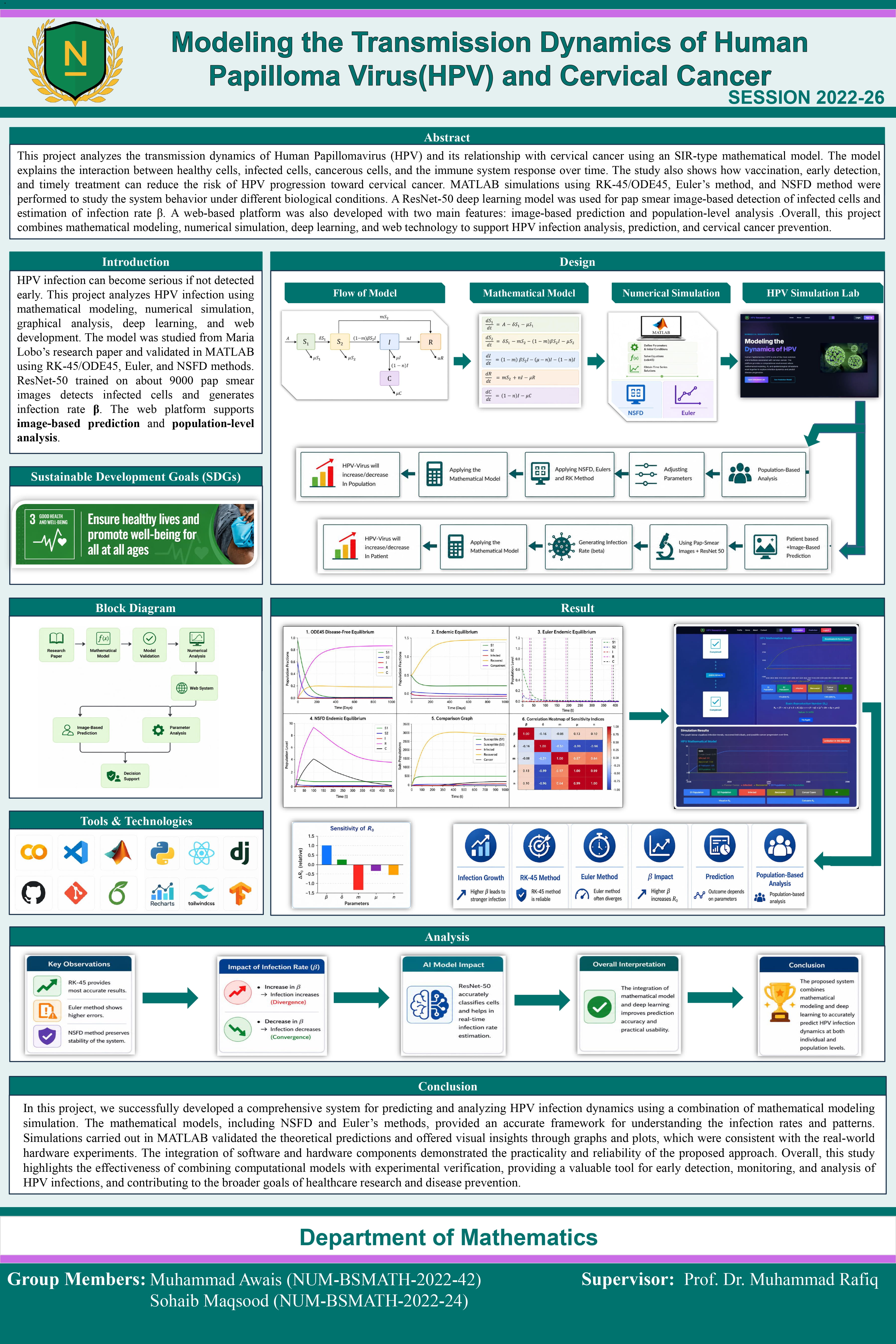
This project analyzes the transmission dynamics of Human Papillomavirus (HPV) and its relationship with cervical cancer using an SIR-type mathematical model. The model explains the interaction between healthy cells, infected cells, cancerous cells, and the immune system response over time. The study also demonstrates how vaccination, early detection, and timely treatment can reduce the risk of HPV progression toward cervical cancer. MATLAB simulations using RK-45/ODE45, Euler’s method, and NSFD method were performed to study the system behavior under different biological conditions. A ResNet-50 deep learning model was used for pap smear image-based detection of infected cells and estimation of infection rate β. Additionally, a web-based platform was developed with features including image-based prediction and population-level analysis. Overall, this project combines mathematical modeling, numerical simulation, deep learning, and modern web technologies to support HPV infection analysis, prediction, and cervical cancer prevention.
Tools: VS Code, Google Colab, MATLAB, GitHub, Git Bash, Overleaf, Python, React.js
Department: Department of Mathematics
Poster