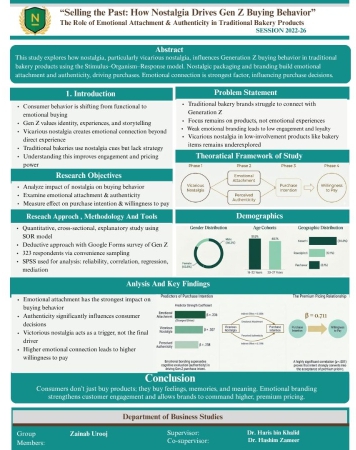
This study examines the influence of vicarious nostalgia on consumer behavior among Generation Z consumers within the context of traditional bakery products. Grounded in the Stimulus–Organism–Response (SOR) framework, the research investigates how nostalgic cues influence purchase intention and willingness to pay through the mediating roles of emotional attachment and perceived authenticity. A quantitative research design was adopted, and data were collected from 323 respondents aged 18–27 using a structured questionnaire. Data analysis was conducted using IBM SPSS Statistics, including descriptive statistics, reliability analysis, factor analysis, correlation analysis, regression analysis, and mediation testing. The findings reveal that vicarious nostalgia significantly enhances emotional attachment, perceived authenticity, and purchase intention. Emotional attachment emerged as the strongest predictor of purchase intention, while perceived authenticity also demonstrated a significant positive influence. Furthermore, purchase intention strongly influenced willingness to pay, indicating that emotionally engaged consumers are more likely to accept premium pricing. The study contributes to consumer behavior literature by extending the SOR framework and highlighting the importance of emotionally driven marketing strategies for Generation Z consumers.
Tools: IBM SPSS Statistics, Google Forms, Quantitative Research Methodology, Regression Analysis, Correlation Analysis, Mediation Analysis, Factor Analysis, Cronbach’s Alpha Reliability Testing
Department: Department of Business Studies
Poster